Showing posts with label birth control. Show all posts

Friday, June 19, 2009

What the Internet Thinks: Condoms Good, Birth Control Bad, and Abortion is a Tricky Issue

A friend of mine sent me a link to the web site What Does The Internet Think? which, according to the description, uses search engine results to get a general sense if the Internet is positive, negative or neutral on any given topic.

So of course what's the first thing I do? Search for reproductive-health related topics, duh.

So what does the Internet think?

Well, for some reason it hates birth control.


But it looooooves condoms.


The birth control pill stikes out too, for some reason (although as soon as you don't put it in quotes the popularity shoots up. A commentary on the Internet's favor for birth and pills, perhaps?)

But! Ladies, there's hope. The Internet loves IUDs!

And finally, of course, abortion. I dreaded the search, but surprisingly?

Just like the rest of America, when it comes to abortion, the Internet isn't quite sure.

Obviously, this is just for fun, and no real measure of public opinion etc. I'd be fascinated to know just how they get their results. What do you think? Acurate? Could anything be throwing the results off?

Friday, June 12, 2009

Do you listen to your friends when it comes to birth control?

Check out this hilarious new video from Sarah Haskins, all about Lady Friends!


Sarah's stuff is hilarious, and this one is sure no exception. But it got me thinking -- as much as the advertising industry may try and unrealistically use the concept of a woman and her friends sharing information (hello granny panties!), that idea doesn't come from nowhere. I often turn to some of my best friends for information on doctors, relationships and, of course, birth control.

But am I alone in this? What about all of you? Who would you turn to first, your friends, a web site, or a doctor for advice on birth control and protection?

PS - read more about the Top Ten Contraception Myths and how to find the best birth control for you.

Monday, June 1, 2009

Last Week's News

Good Morning! In case you missed them, here is a quick roundup of last week's news:


  • Planned Parenthood's CEO Joan Malin had a great Letter to the Editor in the New York Times.


  • Planned Parenthood's Haydee Morales had a column in El Diario about Teen Pregnancy rates in the Latina community.


  • NBC’s Today Show highlights Planned Parenthood’s online tools, My Method and The Check.


  • The Washington Post reports that the White House delivered strong assurances that Judge Sotomayor agrees with President Obama’s belief in constitutional protections for a woman’s right to abortion,


  • Pollster.com offers more insight into the recent Gallup poll on abortion.


Friday, May 15, 2009

Does this study make you want to practice withdawal?

So how many of you have seen this study about withdrawal? It comes from the Guttmacher Institute, which for those of you who don't know, is definitely one of the leading research bodies on sexual and reproductive health, and compares pregnancy rates for couples using withdrawal for birth control versus those using the male condom. And it found that the rates were almost the same!

But does that mean we'll all run out and start relying on withdrawal as a method of birth control?

I know I definitely wouldn't feel comfortable depending on the old "pull out" method to make sure I wouldn't get pregnant -- it just seems like there are too many things that could go wrong. Plus, I have mixed feelings about promoting it as a method. On the one hand, I know as well as anyone that hormonal birth control isn't for everyone. On the other hand, withdrawal is risky, and leaves a lot of room for human error. Plus, it in no way protects against STDs! But what do you think?

PS - how to find the best birth control for you; the top ten contraception myths; and trusting a boyfriend to take the male birth control pill.

Wednesday, May 13, 2009

Top Ten Contraceptive Myths

Good morning everyone!

No matter how well-informed our parents were, or how many times we had that "birds and the bees" conversation with our parents, each and every one of us grew up thinking something crazy about sex and the way babies were made. I remember my best friend Baron insisting that babies came out your belly button when we were in the third grade, and I unfortunately believed until I was 20 that women could only take the "morning after pill" once in their lives, and if they took it again it would kill them (not true my dears, as it's simply a high dose of birth control hormones it has no more harmful side effects than birth control).

So that's why I was so pleased to see this piece in the UK's Mirror about the top ten contraceptive myths:

1 You can't get pregnant if the man hasn't ejaculated
2 You can only get pregnant mid-cycle
3 You can't get pregnant if you're breastfeeding
4 The morning-after pill has to be used the next day
5 Hormonal contraceptives can reduce fertility
6 You need a break from the Pill or patch
7 The Pill makes you fat
8 The implant moves around the body
9 Only mums can use an IUS or IUD
10 Two condoms are safer than one


But I'm curious about all of you. What misinformation did you grow up believeing? And when did you learn that it wasn't true?

Friday, May 8, 2009

The never ending question of the best form of protection

The first time I went on the pill, it was the high estrogen type that came in a thick pink packet. It made me feel like I had PMS all the time, I got moody, and it killed my sex drive. Since then I've tried low-estrogen, progesterone-only, a diaphragm, condoms, and lots of things in between. A few friends of mine started using an IUD and love it. Another friend of mine got hormonal shots and they made her clinically depressed. My younger sister once tried the sponge. The truth is when it comes to contraception, everyone has a story to tell, and there's no one simple option.

Which is why I was excited to see Planned Parenthood's new My Method – a quiz that helps you figure out what form of birth control & protection might be best for you based on cost, frequency, whether you want to take hormones and whether you even need birth control or just prevention against STIs. And who knew -- for me, it recommended I look into an IUD, cervical cap or diaphragm!

But I'm still curious. What do you all use? And does it differ when you're in a committed relationship versus non? For partners who don't have to worry about pregnancy, what do you use? And how often? Do you use more than one method? Which method has worked best for you, and which have you been dying to try?

Thursday, May 7, 2009

Why does this prevention message seem so half-hearted?

Yes, yes, I've seen it -- Bristol Palin talking about preventing teen pregnancy on the Today Show, Good Morning America and every national network that covered the Candie Foundation Town Hall meeting in NYC.

It's definitely a relief to see a national conversation about our disproportionately high teen pregnancy rate, especially one that's focused on prevention. But why are we spending so much time talking about why teen pregnancy is bad and almost no time talking about how to not get pregnant? What kind of message are we sending to kids when we admonish them for making the 'wrong' decisions but then give them no tools to make the 'right' ones? Or when the only 'prevention' method you employ is to talk about how hard it is to be a teenage mother? Doesn't that assume teenagers become pregnant only because they want to?

PS - I love Emily Douglas' piece at RH Reality Check on how shame is an ineffective method of birth control. And check out Planned Parenthood's new web site that actually does feature practical information on how to prevent pregnancy!

Tuesday, May 5, 2009

So how would you market the "male pill" to men?

You may remember, a few weeks ago we were all excited about the possibility of a male contraceptive pill, even while we were wondering whether or not we'd trust the men in our lives to take them.

Well the BBC is reporting that scientists are close to perfecting a testosterone shot that would act as birth control as well -- easier to remember than a daily pill, and a great option should all the trials prove successful.

The only problem? The BBC has been calling the shots "contraceptive jabs."

I don't know about you, but calling something a "jab" is probably the best way to make it sound unappealing. Still, I got to wondering how they will market the final product to men. Sarah Haskins did a great piece on birth control companies coining the the concept of "period control" instead of contraception, but what's the male equivalent?

Will they jut be brave and go with a straight up contraception message? Will theytalk about paternity or one-night stands? What would appeal to the men you know?

Wednesday, April 22, 2009

How has the economy affected your birth control?

Last night I was talking with a friend of mine who's recently been laid off, and the conversation turned to health care. She's lucky, her job is paying for her health insurance for an additional six months (or until she finds coverage elsewhere), but after that she's on her own. And it got me thinking, how much is the economy affecting all of our choices about birth control and health care?

At Planned Parenthood we definitely see a lot of uninsured patients - that's a part of being a safety net provider, and we even have a great program to help people get on public insurance if they qualify for it. An there have been a lot of stories about peoples' birth control decisions being affected by the economy.

But what about you? Have you made any decisions about your health based on the economy? Seen a doctor less? Switched birth control? Gone for a more long term option? Or is your life staying pretty much the same?

Thursday, April 9, 2009

Jesus battles the Pope over condoms


I'm loving this video! Thanks to Free Williamsburg for the link.

Tuesday, April 7, 2009

Who would you rather take the pill, you or your boyfriend?

Any of our readers who've actually been on the birth control pill can tell you: the burden of remembering to take your daily dose can sometimes be exhausting. Although thanks to Obama it'll soon be a bit less expensive, you still have to always worry about bringing your pill pack with you, taking it at the same time everyday and worrying what to do if you miss one. And if you're going on vacation around the time you're switching to a new pill pack, well the pharmacy can make the hassle of getting your pills in advance a nightmare.

Yet now, as Marie Claire UK is reporting (via the wonderful Emily at RH Reality Check), there may be a new pill for men in the works!

The good feminist in me knows that I should be excited: Finally! Equity in birth control! But instead it just makes me nervous. How would I know for sure that he was really taking it? Could I really trust a boyfriend to be more responsible than I am? And how long would it be until we were sure that there are no harmful side effects for the men taking it?

So I'm curious what you think. Is this a great new advancement that's been too long in the coming? Will you run out to try it right away? Or would you prefer to be the one in charge of your daily birth control regimen?

Birth Control Pills as Drugs?

Via feministing, a teenager in Virginia was suspended for taking her birth control pills at school. The school's authorities are claiming it's a case of worrying about liability, but I can't help but wonder if they would have made the same choice had she been caught taking anti-depressants or ADD medicine. Especially when I read this:

During two weeks of watching television game shows and trying to keep up with homework online, the Fairfax teen, an honor student and lettered athlete, had time to study the handbook closely. If she had been caught high on LSD, heroin or another illegal drug, she found, she would have been suspended for five days. Taking her prescribed birth-control pill on campus drew the same punishment as bringing a gun to school would have.


What do you think? A case of misdirected overly-cautious administrators? Or did they target birth control directly?

Friday, March 27, 2009

Family Planning and the Economy

This is a guest post from our new intern, Amy.

A story published by the AP a couple of days ago talks about abortion and the economy. The article provides a powerful example of how an economic downturn influences women's health and their decisions about family planning.

It's interesting for us to see at Planned Parenthood, since we're a safety net provider for so many women (meaning basically that we don't turn anyone away, irregardless of financial means or insurance). Right now people are losing their jobs and their health insurance. Luckily this means that more and more women can still turn to Planned Parenthood to help pay for birth control and other reproductive health needs like OBGYN appointments and cancer screenings.

Interestingly, legislators are starting to take an interest in these issues too. The AP article quotes Lori Lamerand, the CEO of Planned Parenthood of Mid and South Michigan, suggesting, "We're seeing a receptivity among our legislators to hear about prevention policies . . . Folks who wouldn't have opened the doors to a Planned Parenthood representative are now willing to talk to us."

Everyone's talking about the economy now, and it's important to remember that when making tough decisions about how to cut costs, birth control shouldn’t fall by the wayside. We can use this opportunity to get legislators on board with funding to help millions of women continue to exercise their right to family planning.

Thursday, March 26, 2009

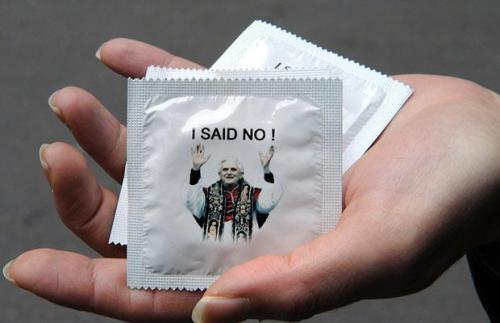
Would you be able to use these condoms?


And more importantly, do you think they're safe to use? (via)

Tuesday, January 13, 2009

House Introduces Affordable Birth Control Legislation

The days of unaffordable birth control may be no longer!!

According to Planned Parenthood Federation of America:

Members of the U.S. House of Representatives for the introduction of The Prevention Through Affordable Access Act, a bipartisan piece of legislation that will provide a no-cost technical fix to restore eligibility for college health centers and safety-net providers to obtain low-cost birth control, and pass the savings on to college students and low-income women. The bill (HR 398) was introduced by Representative Joseph Crowley (D-NY) and has bipartisan support. Original sponsors of the bill include Representatives Mark Kirk (R-IL), Tim Ryan (D-OH), Charles Dent (R-PA) and Adam Schiff (D-CA).


And it's not just the House that's taking action:

Last week, Senate Majority Leader Harry Reid (D-NV) introduced the Prevention First Act (S. 21), which also includes a provision to restore access to affordable birth control.


Since the 1970's college health care clinics as well as safety-net providers had been able to purchase birth control inexpensively, passing that savings onto their patents (mainly college students and low-income women) and enabling them to purchase birth control for as little as $5-$10 a month.


However, thanks to the 2005 Deficit Reduction Act, this amenity disappeared and birth control prices skyrocketed -- saddling college students and low income women with prices as high as $50 a month.


So if this passes, birth control would be affordable again! Which would make so much more sense than unaffordable, don't you think?

Tuesday, December 16, 2008

Price of codoms worldwide


In case you're traveling to Ireland or something and didn't realize you should probably stock up, below find a handy-dandy chart of condom prices around the world. And while they may be kind of pricey here in NYC, don't forget: at Planned Parenthood they're always free! (via)

How soon will the HHS regulations come down?

The horrific HHS regulations, which as the LA Times pointed out on Dec 2 would basically erase the credibility of the medical profession, might become law this week. Stay tuned.

Wednesday, October 29, 2008

Hump Day Headlines!

It’s Wednesday, otherwise known as hump day! Here is your appropriately-reproductive-health-themed news roundup:

  • According to Newsweek, more than $1million has been donated to Planned Parenthood in Sarah Palin’s name. Who knew an anti-choice candidate could do so much good for women’s health?

  • A clinic in Iowa is holding a birth control party! Called “Smart and Sexy,” it’s apparently just like the traditional Tupperware parties of the ‘50s, only this time they’ll be talking about how best to prevent pregnancy instead of how best to store leftovers.

  • File under gulp: Syphilis is on the rise in Knox County, TN! So in case you were planning any late-October romantic jaunts to the deep south, you know, be careful. As a bonus, public health officials are helpfully warning that either paying for or trading something for sex may put you at a higher risk.

  • According to a new survey by the Office for National Statistics, UK women aged 16 to 49 prefer the pill to condoms when it comes to contraception. Insert requisite joke about the Brits’ oral fixation here..

  • Laura McGann over at the Washington Independent has a nice roundup of Sarah Palin’s coded anti-choice views.

  • A federal appeals court heard arguments yesterday on whether a Virginia law punishing doctors for performing a late-term abortion procedure called dilation and extraction should be upheld. Although the court is expected to take several weeks to make its decision, if the law is overturned it would make only ten, not eleven, states that have laws banning the procedure.

  • Amanda Marcotte over at RH Reality check has a great piece up reminding us to not only call for the removal of abstinence-only education, but the implementation of comprehensive Sex Ed. Because the only thing worse than simply telling our kids not to have sex is telling them nothing at all…

Tuesday, October 28, 2008

News! Daily News!

Your Tuesday in reproductive health:

  • A hospital in Tarzana, CA, just outside of Santa Monica, has banned all elective birth control procedures. This includes not just pregnancy termination, but measures such as tubal ligations for vasectomies; a procedure that, until this decision, the hospital performed about an average of seven times a month. According to KTLA news in Los Angeles, Providence Health System bought the hospital in September and has now implemented a policy that adheres to Catholic teachings prohibiting abortions and surgical methods of birth control on hospital property.

  • Although perhaps they should have listened to Frank K. Flinn, Ph.D., adjunct professor of religious studies in Arts & Sciences at Washington University, and author of the Encyclopdia of Catholicism (2007). He argues that the Catholic Church has not, in fact, always been opposed to abortion, but rather that its position has been an evolving one. He also points to Joe Biden as proof that there are many ways of interpreting Catholic theology when it comes to reproductive health(via).

  • And finally, we can add yet another option to the multi-faceted birth control fray: Barr Pharmaceuticals has announced FDA approval for its newest pill, low-hormone Seasonique (or LoSeasonique). The pill boasts its period reduction qualities, claiming women who take it will only have 4 periods a year. For an interesting take on why pharmaceutical companies market birth control with language on period reduction and not, say, contraceptive effectiveness, please see Sarah Haskins.

Sunday, September 21, 2008

Protect Women's Health -- Send Your Comments to HHS

Last month, the Bush Administration proposed a dangerous new Department of Health and Human Services rule, which would jeopardize the health of women across the nation. In a NY Times op-ed, Senator Hillary Clinton and Planned Parenthood CEO Cecile Richards explain:


It would require that any health care entity that receives federal financing — whether it’s a physician in private practice, a hospital or a state government — certify in writing that none of its employees are required to assist in any way with medical services they find objectionable.

Laws that have been on the books for some 30 years already allow doctors to refuse to perform abortions. The new rule would go further, ensuring that all employees and volunteers for health care entities can refuse to aid in providing any treatment they object to, which could include not only abortion and sterilization but also contraception.

Health and Human Services estimates that the rule, which would affect nearly 600,000 hospitals, clinics and other health care providers, would cost $44.5 million a year to administer. Astonishingly, the department does not even address the real cost to patients who might be refused access to these critical services. Women patients, who look to their health care providers as an unbiased source of medical information, might not even know they were being deprived of advice about their options or denied access to care.

The definition of abortion in the proposed rule is left open to interpretation. An earlier draft included a medically inaccurate definition that included commonly prescribed forms of contraception like birth control pills, IUD’s and emergency contraception. That language has been removed, but because the current version includes no definition at all, individual health care providers could decide on their own that birth control is the same as abortion.


If you read the news, you probably know that many Americans are facing difficult economic times. Millions are uninsured, and even more are under-insured. More and more, people are relying on low-cost health care from providers that receive government funding. And yet, the Bush administration is working to make it more difficult for low-income women to receive necessary medical care? Remember that women might not even know they're not receiving full information -- people tend to trust their doctors, and under this rule doctors would not have to inform patients of options they don't agree with.

You can help by writing Health and Human Services today. The rule has a 30 day comment period from the public before a decision is made about whether or not to instate it. But time is running out -- the deadline is September 25. You have only a couple of days to make your voice heard. Send your letter today, and urgently pass along the message to all of your friends and family!